Category: Uncategorized
No Scoop for Yu! Is a No-No Greatness or Just a Statistical Oddity?

I tuned into Friday night’s Rangers-Red Sox game just as the Ranger’s Yu Darvish took a no hitter into the ninth. After two quick outs, David Ortiz stepped into the box and as a Sox fan, I thought if anyone could break it up, it would be Big Papi. Right on cue, Ortiz pulled a hard grounder that just managed to beat the Big Papi shift that has the shortstop playing behind second base and the second baseman in short right field. This heart breaker was the proverbial “ground ball with eyes” that squirted through just a few feet to the right on your screen of Elvis Andrus and a few feet to the left of Rougned Odor (not a typo) who couldn’t scoop it up albeit a nice diving effort. – Click HERE to see it. – My first thought was “wow, how random is it that this routine ball just
managed to avoid all the fielders and turn a rare pitching feat into just another forgettable one hitter?” Being the curious sort, this got me wondering, is a no hitter really a masterful pitching performance or just a statistical anomaly that every ball put in play is, against the odds, imminently playable by the defense?
How do we make sense of a baseball universe where up is down and down is up, that is, a world where bloops fall in – line drives in the score book – and actual screaming line drives are caught for outs? They say these are all suppose to even out over time so if this randomness is true, then something like a no hitter is just the luck of the draw that happens periodically and is something that we can mathematically demonstrate with computer models. I say “we” of course, but I don’t really mean you and I, we’re not that smart. The geniuses over at the Society for American Baseball Research (SABR) are however and indeed, completed such an investigation just a few years ago and published the results in the spring of 2011.
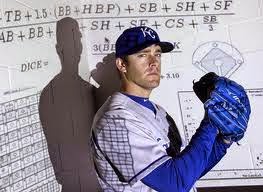 The idea was to simulate games with a computer program based on statistical knowledge from the previous 133 seasons (1879-2009) and see how many no hitters occurred. Secondly, SABR wanted to see if they could predict which players were most likely to accomplish a perfect game or no hitter. In reality, there were 250 no hitters in that span but when SABR ran their first simulation of 133 years of games, the model only produced 123 no hitters. In other words, if no-hitters were completely random events, they would happen only about half the time they actually do. The SABR guys don’t give up that easy so rather than use average probabilities based on the 133 year data set, they tweaked the program to use each year’s probabilities for hits/outs/etc, as they rolled through the 133 year simulation. This time the model produced 214 no hitters, better but still far short of the 250 actual number. Realizing they were on to something, they then tweaked the program on the other side of the ball and got more specific with the statistics for the pitchers, using their probabilities for each year as they rolled through the simulation. The third attempted model produced 243 no-hitters, just a 4% differential from the real world result of 250. Pretty good shootin’ if you ask me. To summarize, if SABR simply used a flat rate of probabilities based on the history of baseball, no hitters would happen far less often than they do but when the simulation took into account year-to-year pitching statistics, the model simulated a true number of no-nos.
 So what does it mean? The conclusion from the study said, “using year by year data improved the results a bit while including pitcher-by-pitcher data from each year of his career greatly improved the results…This indicates that those who have pitched no-hitters and perfect games had, in general, far superior pitching ability than the average pitcher in baseball history.” Duh! My thought that no-nos are just dumb luck might seem like a dumb question, but why then did SABR have the curiosity to complete this study? Because these guys are years ahead of “Baseball Rules! by JT”…and that’s ok with me. I’m glad I asked the obvious question and now, don’t we all feel better the obvious answer is backed up by science? (Check out the list of no-nos HERE, funny how they’re mostly well known names.)
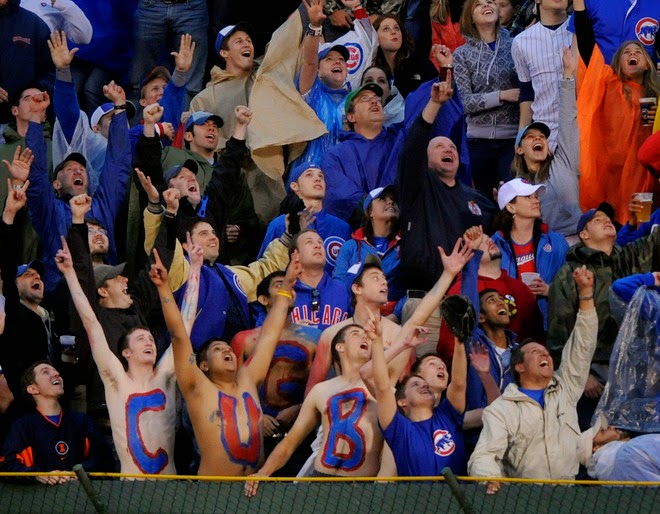 But it’s not that quite black and white, while the simulation tried to predict which pitchers were most likely to throw a perfect game, the only one who showed up on the list who actually did was Sandy Koufax. There are many very good pitchers capable of this feat but there is no predicting who will actually do it. In the end, while you have to be very good to pitch a no-no or a perfect game, there indeed is an element of randomness – or you might say luck – involved that explains the Ortiz grounder. (This also cracks open the door to the idea that sometimes a very average pitcher gets very lucky – remember Dallas Braden?) In general, you have to be good, but on top of that, you also have to have the baseball gods on your side which is why there is nothing in sports quite like the progressive tension as one of these feats nears its completion or on a larger scale, the season and playoffs run their course. This dark space from which the randomness oozes is also where the fans take refuge with their loyalty and faith, rally caps and superstitions, petitioning the gods for mercy in their favor. This is why there is nothing like being a baseball fan.
One last thought – I’m not sure what Yu Darvish did to piss off the gods, but just in the past year, he’s lost both a no-no and a perfect game with two outs in the ninth. What are the odds of that? I’ll get back to you on it… Click HERE to see the full SABR report.
Jim Tosches is an amateur umpire and blogger in Encinitas, Ca and author of the book, “The Rules Abide: The Thinking Fan’s Guide to Baseball Rules (With History, Humor and a Few Big Words)”
CLICK HERE TO SEE REVIEWS AND PREVIEW BOOK (Sping Sale – eBook only $2.99, Paperback $11.69)
The First Instant Replay Walk-off – It’s Got Positraction!
It was just a matter of time before the first game-ending play was reversed using instant replay…I mean, the first play that was reversed that became the walk-off, game-ending play…after everybody already walked off, after the play had ended, you know, after the review of the ending play. Please wait a minute while we sort this out…
Ok, first there is the play – a Sterling Marte opposite field triple off the right field wall in bottom of the 9th inning of a tie game. The throw to third got loose and Marte scampered home but was called out after Pablo Sandoval quickly recovered and relayed the ball to the plate. (Click HERE to see it.) The throw clearly beat the runner and Giant’s catcher Buster Posey obviously got the tag down ahead of the slide, but there is this technicality in the rule book that says the runner is safe if he touches the base before being put out, which is what the replay confirmed. I joke about that little “technicality” because throughout baseball’s history, when the throw beats the runner and the tag is down in front of the slide, the runner is usually called out by the arbiter. Traditionally, when calls are so close to the naked eye they can go either way, an experienced official makes a call based on all the other information at his disposal (the quality of the defensive play and the runner’s decision, the game score, situation, etc). The includes the little factoid of the throw beating the runner. The human element of the game, that formally recognizes something called an “error” for example, surely includes how the game is officiated.
Proponents of using video review will argue that this is the exact reason why expanded IR was introduced, to sort out the oh-so-close game-ending play, but I’m not so sure of that. Most of the outrage over the years has been over the egregiously bad calls which are few and far between and not the routine close ones we see every day. For me, most notable are the calls at first a few years ago that ruined Armando Galarraga’s perfect game – which had nothing to do with the outcome of the game – or the one in 1985 that had everything to do with the Royals winning the World Series. These were obvious to everybody and it would have been a good thing if they could have been reversed. If we want IR to be there for those, we have to endure its use on the routine ones too. In the case of the Marte play, conventional wisdom says the runner must take that chance to win the game and force the defense to make a good throw. The burden of proof was sitting on his shoulders and the defense met the challenge by executing a nice play to recover from the earlier miscue, the throw to third. With the game on the line, conventional wisdom also dictated to the umpire that Marte was out and the game should be settled definitively in extra innings. You might be outraged by that statement or in agreement – this is the new continental divide that has polarized baseball fans. (Take a look at an old Emo Philip’s joke that illustrates this and change the last question to “replay or no replay?” Trust me – click HERE and scroll down below cartoon.)
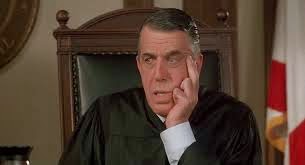
So if IR takes something away from the game, what does it add? In the case of the Pirate-Giant game, it did manage to add a layer of tension and excitement for the fans, albeit a derivative drama that is unrelated to the play on the field. The closest thing I can think of in sports is the idea of the photo finish in horse racing which very effectively ratchets up the excitement pending the release of the photo, but I’m not sure anyone ever had an impassioned vested interest in the outcome that wasn’t directly related to the piece of paper squeezed tightly in their sweaty hands. In a way, the same is true with baseball’s new “lifeline” because if you’re a Pirate or Giant fan, you had that same vested interest and elevated blood pressure. But if you’re a baseball fan in general, at the end of the day, the excitement was akin to the walk-off bases-loaded walk. There wasn’t much action, and the whole hot mess of a game ended on the technicality of the location of the ball by perhaps an inch or two. Ho-freakin-hum; was this really settled like that? I know – I get it – we want to feel like justice was served with the final call. We want Marisa Tomei to walk into our baseball courtroom and give that strangely sexy lecture about positraction on the ’64 Chevy from “My Cousin Vinny” (click HERE). We want the boys to be acquitted – we want a happy ending. Due process and representation are good things in theory, but, how do we feel when a guy gets off the hook based on a technicality viewed under a microscope in a lab somewhere? Should Marte have been called out? That is the baseball morality question hanging in the air with IR – the spirit v. the letter of the rules. See that look on Fred Gwynn’s face? That’s how I feel about this.
Jim Tosches is an amateur umpire and blogger in Encinitas, Ca and author of the book, “The Rules Abide: The Thinking Fan’s Guide to Baseball Rules (With History, Humor and a Few Big Words)”
CLICK HERE TO SEE REVIEWS AND PREVIEW BOOK (Spring Sale – eBook only $2.99, Paperback $11.69)
Glove is All Around -The Anatomy of a Catch!
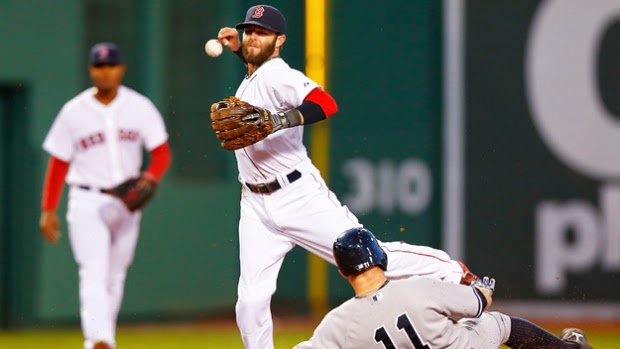 What typically happens is that as the fielder takes the ball out of his glove, he loses grip and the ball comes out in a manner that is not related to the trajectory of the initial throw he is receiving. Let’s say the second baseman is taking a throw from the hole – if he loses control taking it out of his glove, the ball usually winds up going backwards, behind second base towards center or left center, the direction in which he was cocking his arm for the throw. This change of direction is usually the evidence that the ball came loose on the transfer. If it comes out straight to the ground or floats around the fielder’s hands, this indicates a drop or a bobble. Going back to the language of “voluntary and intentional,”
if it’s the first case, we can judge that the ball came out with the intent to make a throw so we can call an out based on a nanosecond of possession. This nanosecond comes into conflict with the idea of “holding the ball long enough” so after a brief period of changing how these are ruled on the field, the World Umpires Association quickly updated the protocol for MLB umpires, adding language that says the fielder “does not have to successfully remove the ball from his glove” in order for it to be ruled a catch. This added step changed the way this play has been evaluated since the beginning of time so kudos to the league for quickly fixing the problem.
Jim Tosches is an amateur umpire and blogger in Encinitas, Ca and author of the book, “The Rules Abide: The Thinking Fan’s Guide to Baseball Rules (With History, Humor and a Few Big Words)”
CLICK HERE TO SEE REVIEWS AND PREVIEW BOOK (April Sale – eBook only $2.99, Paperback $12.99)
Pirates-Brewers hurt each other’s feelings…benches clear! Divas and DEVO
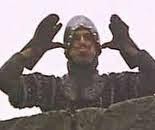 If you didn’t see a clip of the baseball “brawl” yesterday in Pittsburgh, here’s what you missed – in the top of the third, Milwaukee’s Carlos Gomez hit a deep fly to center field that he thought was a dinger so he went into a slow home run trot, a la Domingo Ayala, and hurt pitcher Gerrit Cole’s feelings because in fact, the ball didn’t leave the yard. After Gomez reached third on his inside-the-park triple, Cole ran towards, but not too close to Gomez, shouting mean words in his general direction like an insulting Frenchman which in turn, hurt his feelings as well. This visibly upset many of the other players and coaches who trotted on to the field somewhat rapidly to air their grievances but this only lead to pushing and shoving and an all-out scuffle. Eventually, some players wrestled on the grass and got stains on their bunched-up trousers. Oh yeah, and then the Brewers went on to win an otherwise great game, 3-2 in 14 innings.
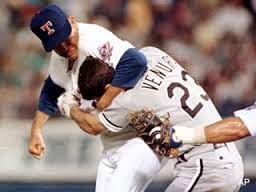
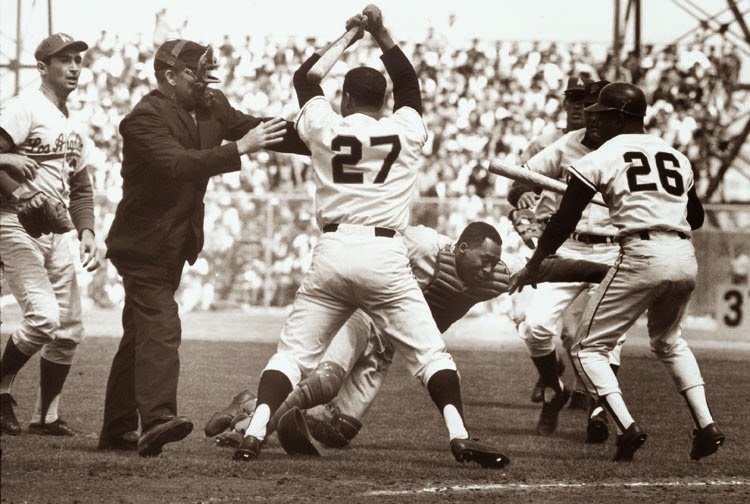 Certainly a part of baseball’s beauty is the way the game has historically policed itself with such grace, the gentleman’s way, civilized and with few words. The last resort nuclear-option unfortunately has always been the on-field skirmish and its legacy is something we can’t be proud of. Juan Marachal clubbing Johnny Roseboro on the head in ’65, Nolan Ryan comically holding Robin Ventura in a headlock reigning down noogies in ’93, the otherwise honorable Pedro Martinez face-planting the then 72 year old Don Zimmer in ’03. Historically there has been little merit to these incidents, as it was in Pittsburgh yesterday. The problem today is exacerbated by a general impatience and an unflattering need we seem to have to tell everybody what bothers us, and right now at that. These baseball scenes reflect this sort of devolution of our social skills, D-E-V-O! What starts with a benign Gomez bat flip escalates to the point of a back-up outfielder, Travis Snyder, sucker punched amid the scrum by the other team’s back-up catcher, Martin Maldonaldo. If there is any merit to the old hockey fight, it’s at least an attempt to take it outside, inside, and let the matter be settled by the two primary combatants for the honor and glory of their team. Yesterday’s fight only proved once again how shallow and pointless baseball confrontations are, even if you agree there is merit to fighting in sports. Like the need to tweet or post on Facebook about what they had for breakfast, Maldonado and Snyder had to make it about them, after both Gomez and Cole overreacted like children.
Pine Tar Redux – Not For Nothin’, Lets Take a Look Back…
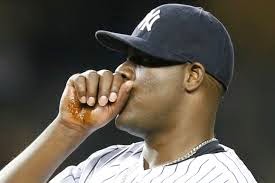
It’s quite clear in our big-screen, high-def world that Yankee pitcher Michael Pineda was using pine tar on his pitching hand last Thursday night versus the Red Sox in Yankee Stadium. Before the reaction on social media could crash the internet or you could hire Matt Taibbe to do an investigative piece, Boston manager John Farrell was silent on the issue immediately after the game while slugger David Ortiz had this to say, “everybody uses pine tar, it’s no big deal.” If your first instinct is to call Oliver Stone so somebody can get to the bottom of this cover-up, let me ask you a question. Pineda was obviously breaking the rules, but was he really cheating? I’ll answer that somewhat circuitously by going to the way-back machine and taking a look at the only pine tar controversy that matters, the 1983 George Brett incident. Work with me here…
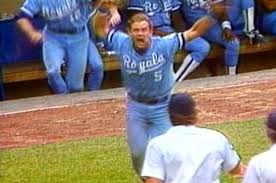
You can’t mention “the pine tar game” without first thinking about the iconic image of KC’s hall-of-fame third baseman George Brett’s full-blown nutty, charging out of the visitor’s dugout at Yankee stadium like the Incredible Hulk, hellbent on tearing the umpires limb from limb once he learned he had been called out for illegal use of pine-tar, thus negating his go-ahead, 9th inning, two-run homer and ending the game on the out call. What people often forget is that the Royals got the last laugh after their appeal was upheld by AL Commissioner Lee MacPhail – the call was overturned, the home run put back on the board and the suspended game won by the Royals a few weeks later in front of about 1200 fans in New York. The reason the ruling was reversed is because the rule itself had nothing to do with the hitter gaining an advantage. The only reason for not allowing pine tar past the first 18 inches of the bat is because the pine tar mucks up the baseballs. The logic was that if there was no advantage, then there should be no penalty…except to get rid of the bat.
So what does that have to do with Pineda? He was presumed to be using pine tar to help him grip the ball on a cold April night in the Bronx. GRIP! The same reason hitters use the sticky substance on their bats, which is legal. While scuffing, cutting or gooing up the ball could make a pitch dance in an unnatural way, just having a good grip doesn’t give Ace out there any superpowers. As a result, while it might be a technical violation of the rules, it’s not viewed by the players and coaches as cheating. If the managers aren’t going to say anything, then the umpires certainly aren’t inclined to do anything about it. The larger principal at work here is that very often in baseball, it’s the spirit of the rule that is more important than the letter of it. Personally, I can’t stand it when coaches beg umpires to make a ruling based on a technicality that has nothing to do with the baseball action…let the players determine the outcome. 
Its fair to say that Joe Torre and the rules committee are not afraid to experiment with changes as they’ve done with instant replay and collisions at the plate so this is something else they might consider. Maybe they’ll simply sanction a sticky substance to use for grip that’s not particularly messy. Hey, I’ve got it – they should let major league pitchers use that stuff bank tellers use, then after the game, they can use it to count their money too! Pitching in the bigs is good work if you can get it!
————————————————————————
Okay, before you go, if you are indeed an Oliver Stone fan, I’ve dug up some interesting facts about the 1983 pine tar game we could use in the movie:
- The same tactic was used successfully against the Yankees and Thurman Munson a few years earlier so this is a trick manager Billy Martin obviously had been hiding up his sleeve for a while. Brett was the mark but again, it backfired on Martin in the end.
- That said, the fiery skipper was not going to go down without his own fight so when the suspended game started up a few weeks later, Martin obstinately appealed that Brett missed first and second base. The original umpires were not working the restart so Brett was ruled safe per the original crew’s signed affidavits. Who knew what, and when did they know it?
- Amid the chaos caused by Brett’s conniption, someone in the Royal’s camp wrestled the bat away from the umpires and relayed it to their clubhouse ostensibly to hide the evidence. The culprit was later reprimanded by the league and identified as none other than, ironically, the dark lord of foreign substance on the mound, Gaylord Perry who finished his career with KC – go figure.
- And one more for you trivia buffs. Because the teams were limited to their rosters from the date of the original game, the Yankees were shorthanded so they fielded a team for the final third of an inning that had pitcher Ron Guidry in center field and Don Mattingly at second base. This is the last time a lefty played second base in the majors. Mattingly also played third base for a few games in ’86.
If you’ve enjoyed “Pine Tar Redux,” there’s a lot more where that came from in my book, “The Rules Abide: The Thinking Fan’s Guide to Baseball Rules (With History, Humor and a Few Big Words)”
On sale HERE for only $2.99 for eBook and $11.99 paperback
Aaron’s #715 – To The Moon!
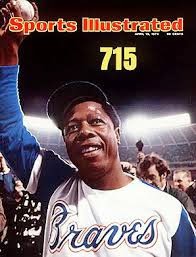 This week marked the 40th anniversary of Hank Aaron’s record setting 715th home run. To a kid growing up in the 70’s, this event was as big it got, “The Thrilla in Manilla”, Evel Knievel jumping Snake Canyon, Bobby Riggs and Billy Jean King’s “Battle of the Sexes” throw down all rolled into one gigantic super-hyped inevitability. How big? I was 13 at the time and remember being in the car with my parents and hearing the call on the car radio…I remember it was a Monday night. We usually only use tragedies to mark those handful of times in life when we remember exactly where we were when something historic happened, but this one was different, transcendent in ways a 13 year old simply couldn’t grasp. Growing up in Massachusetts, I wasn’t completely oblivious to race issues – the Boston busing crisis was in our consciousness – but again, I was just a 13 year old fan so for me, number 715 was just a
baseball thing. I didn’t realize at the time it was another moon landing, man overcoming all the obstacles to go somewhere new! I want to say it’s hard to grasp that some people considered Aaron’s accomplishment itself a tragedy – a black man eclipsing the record of a white icon – but sadly there was still plenty of hatred to go around following the era’s civil rights progress. Aaron personified grace under pressure in his quest for the record and is a true American sports hero!
Jim Tosches is an amateur umpire and blogger in Encinitas, Ca and author of the book, “The Rules Abide: The Thinking Fan’s Guide to Baseball Rules (With History, Humor and a Few Big Words)”
CLICK HERE TO SEE REVIEWS AND PREVIEW BOOK (April Sale – eBook only $2.99, Paperback $12.99)
Crash Course – "Slide or Avoid" Adopted in Bigs
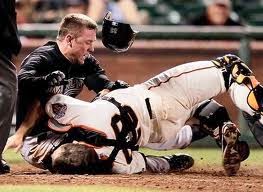
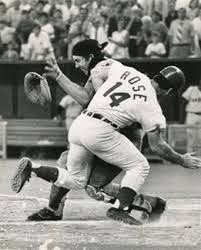 First of all, I personally think it’s about time this rule has been changed to protect the catchers. Pete Rose may have cemented his hard-nose image by ending Ray Fosse’s career in the 1970 all-star game, but we’ve also seen one of baseball’s premier players (Buster Posey) taken out in recent years too, so at what cost do we enjoy these train wrecks? This effort by the runner has never been supported by the rules, plain and simple. Remember that embarrassing karate chop by Alex Rodriguez in the 2004 ALCS to knock the ball out of Red Sox pitcher Bronson Arroyo’s hand? How is an attempt to run into the catcher any different? This is classic interference, but traditionally allowed because of another more-or-less illegal play that’s also been tolerated, blocking the plate. If any fielder stuck his foot out to trip a runner, it would be an obvious case of obstruction so why is it okay that a catcher does it an inch in front of the plate? I know – I get it that the basic object of the game is to score a run so its inherent importance has dictated that all the big boy stuff is cool, but interference by the runner and obstruction by the catcher are indeed illegal. At the end of the day, baseball has looked itself in the mirror and accepted that the game is simply not a showcase for brute force so this rule change attempts to clean up both of these rule-based loose-ends.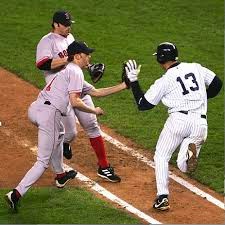
The point is that while the new rule is in place to create a safer environment for a defenseless catcher, it doesn’t prevent the players from playing the game of baseball – unavoidable collisions will happen. The real story will be the first time a catcher who is blocking the plate is charged with obstruction. The use of replay might be making for a kinder, gentler relationship between managers and umpires, but when that happens, you’ll surely see an old fashioned heave-ho!
Jim Tosches is an amateur umpire and blogger in Encinitas, Ca and author of the book, “The Rules Abide: The Thinking Fan’s Guide to Baseball Rules (With History, Humor and a Few Big Words)”
CLICK HERE TO SEE REVIEWS AND PREVIEW BOOK (April Sale – eBook only $2.99, Paperback $12.99)
The First "Bad" Call Overturned – A Deal is a Deal!
In an earlier post this spring, I predicted that the expanded use of instant replay will show just how accurate major league umpires are. MLB’s own analysis of last season seems to support this as there were 377 wrong calls in 2,431 games, or about 1 every 6.4 games – not bad if you ask me. I also promised that when the first call was overturned, there would be a logical explanation and that I would write about it, so a deal is a deal…
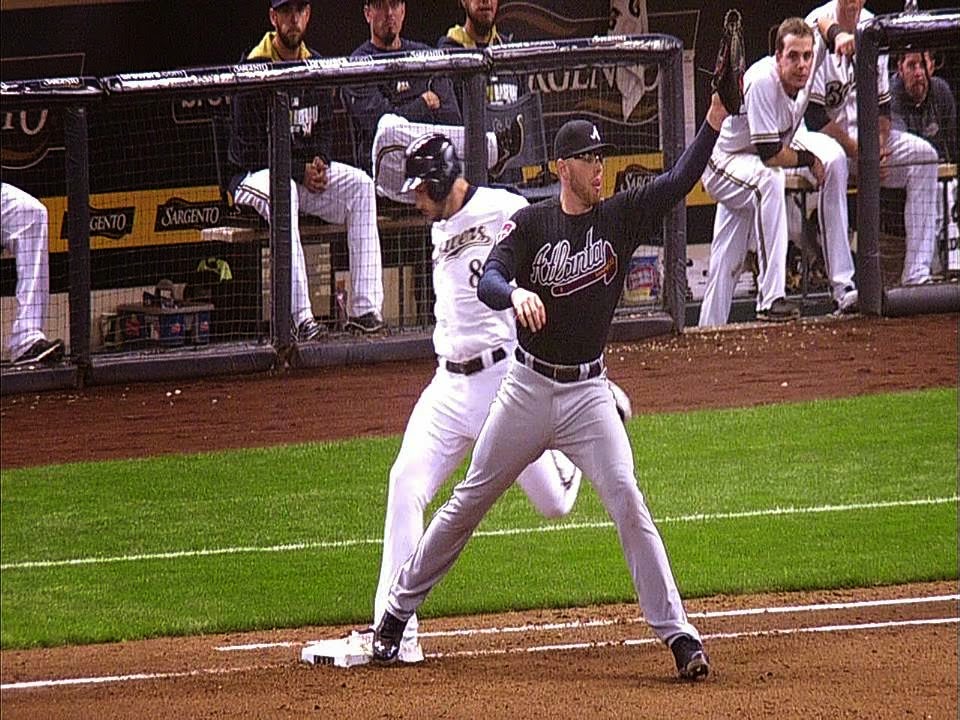 The call in question followed a routine grounder to third that the Brewer’s Ryan Braun appeared to beat out at first following umpire Greg Gibson’s safe call. Brave’s manager Fredi Gonzalez promptly challenged the call which replay showed conclusively was wrong; it was close but the ball clearly beat Braun so the call was reversed. So with all their skill and accuracy, how was this routine “banger” kicked by the first base ump? First a disclaimer: I’m not the umpire that made the call. I wasn’t there. This is only my opinion, but none the less, I think I have a valid explanation.
In the section of my book (“The Rules Abide”) titled “Blues Clues,” I discuss many of the factors that affect an umpire’s call when a play is so close to the naked eye, it could go either way. One of the biggest factors revolves around the quality of the play that preceded the close call. That is, if it’s a great defensive play, the fielder usually gets the benefit of the doubt, but if it’s routine and is botched, the benefit toggles back to the runner – I think this is exactly what happened today. Brave’s third baseman Chris Johnson double-clutched and threw off his back foot, turning an easy play into an awkward one and making it very close at first. I’m not saying a sloppy play in and of itself warrants punitive action by the umpire, but had there not been instant replay and the safe call stuck, Johnson surely would have been charged with an error. This is simply a baseball tradition that is built into the way the game is officiated. It’s not an absolute, but there is a psychology to umpiring – while the officials are doing their level best to be impartial beyond question, it doesn’t mean their calls are made in a vacuum. This is an important distinction as these two are not mutually exclusive. An umpire can be impartial to the teams, but not impartial to the quality of the play. The vacuum in this case is MLB’s NYC HQ where the replay umpire got the call “right” using video evidence and no other ancillary information that an on field umpire might use to make a call. Proponents of instant replay will argue that they got the call right, so that’s all that matters. Opponents will argue that misplaying the ball and then not getting the close call is just the price for turning a routine play into an adventure. In my opinion, these aren’t mutually exclusive either so they’re both right to a degree. Baseball fans will never agree on this so we’ll just have to see how this plays out over time.
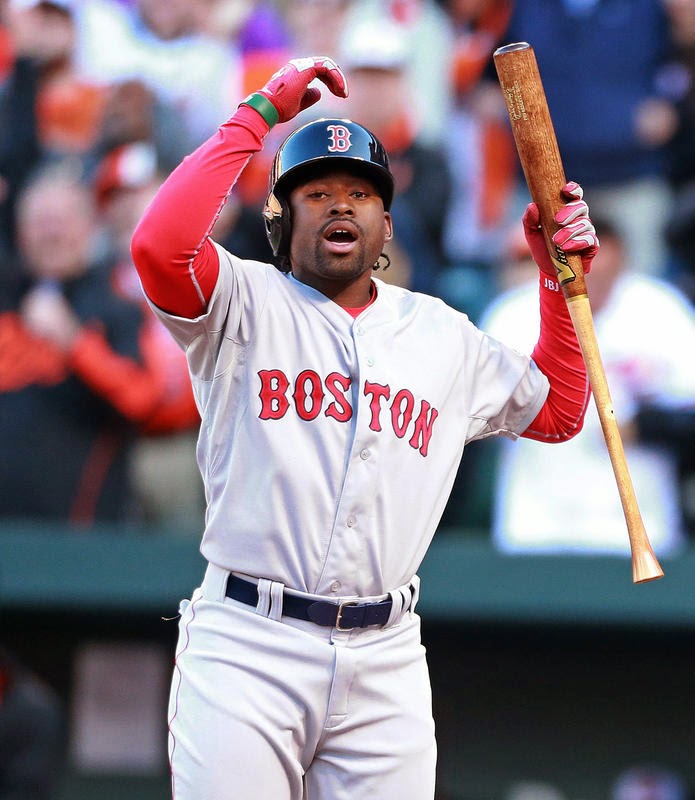 Another quick one on the psychology of umpiring. My Red Sox lost today to the Orioles 2-1, their ninth inning rally snuffed out with the tying run on second when pinch hitter Jackie Bradley Jr. took a game-ending called third strike that appeared to be high. What caught my attention about the at-bat is that out of six pitches, Bradley only swung at one pitch (0-2 foul) and in fact took all three called strikes. The second to last pitch was just off the outside part of the plate, a ball, as the Baltimore crowd oohed and aahed when the home team didn’t get the call. The very next pitch was also slightly outside the zone, but this time O’s closer, veteran Tommy Hunter got the call. Again, I’m not the guy who made the call but there is a mix of both psychology and baseball tradition going on. The psychology involves how rookies are treated v. established players and the baseball tradition involves that old principal that the batter should protect the plate with two strikes. Sometimes a guy who fouls off a bunch of pitches earns the benefit of the doubt and sometimes a hitter with a good eye might appear like he’s not working hard, which is a very odd dynamic when you think about it. In this case, add up the evidence and you can see why the umpire was prepared to ring up Bradley on a pitch close enough to go both ways- you can’t get all the close ones – swing the bat! I’m sure instant replay could have demonstrated that pitch was a ball, but this is exactly what people are talking about when they say the “human element” is part of the game and should be preserved. We wouldn’t want to watch the game played by robots; would we really care to see it umpired that way, with no humanity? If we ever get to the point where blue hover bots are calling balls and strikes, the game as we know it will be gone.
And one last thing in the “you always see something you’ve never seen before” department: today’s Sox-O’s game saw an out scored 3-1-3. A hard grounder was knocked down by O’s first baseman that deflected to the pitcher who then threw back to first for the out. Never seen that one before – it’s always something!
Jim Tosches is an amateur umpire and blogger in Encinitas, Ca and author of the book, “The Rules Abide: The Thinking Fan’s Guide to Baseball Rules (With History, Humor and a Few Big Words)”
CLICK HERE TO SEE REVIEWS AND PREVIEW BOOK (April Sale – eBook only $2.99)
Opening Day – What does it mean to you? Is baseball still our national pastime?
 Opening day of the major league baseball season is unlike any other. I’m not going to get all schmoopy on you, but if you’re a baseball fan, you know what that means. Sure, everyone is tied for first place and this could be the year, but beyond that, your oldest best buddy is back in town for six months and just like that, everybody is young, good looking and flush with cash – “déjà vu all over again,” only new. I’ve made the brief argument before that baseball is still going strong as our national pastime – “in all its forms it tickles each of the sense…seeping into our lore and leisure” – but you could write an entire book exploring that argument. Baseball is an old game, but it seems to find new ways to get under our skin. Let’s take a quick look at baseball in modern times.
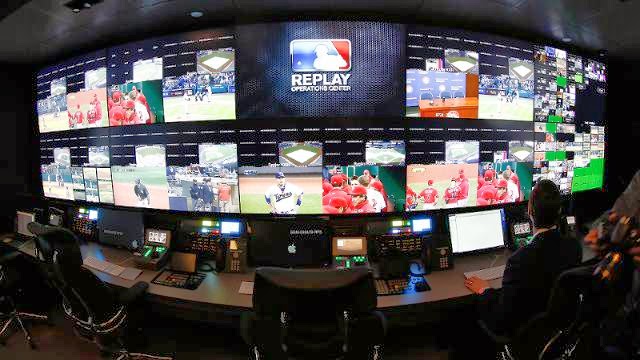 Above all, the real catapult for major league baseball has been the success of MLB.COM, operated by MLB Advanced Media, the world’s most successful sports streaming company. Yes, you heard me correctly. MLBAM was created to standardize and operate baseball’s internet presence for all 30 major league teams in 2003 and has been rolling out advanced capabilities and interactive ways to enjoy the game ever since. The timing of its development fit perfectly with the expanding mobile society spurned on by the economic growth from the 80s to the early 2000’s. As people criss-crossed the nation following jobs and life, MLB.com tapped into the souls and wallets of fans who realized they could bring the home team with them wherever they went – and now do so literally with the advancements in smart phone technology. In years gone by, a sad side effect of relocation for an ex-pat was the slow erosion of interest in your team, generally unsustainable only with box scores from a USA today. The information age was the perfect complement for a fan base fascinated by data to begin with so combined with relatively cheap travel, inter-league play, live streaming games, fantasy baseball, expanded digital media coverage, etc, it’s been a perfect storm that has baseball fans as engaged as ever with their beloved game.
 Jim Tosches is an amateur umpire and blogger in Encinitas, Ca and author of the book, “The Rules Abide: The Thinking Fan’s Guide to Baseball Rules (With History, Humor and a Few Big Words)”
CLICK HERE TO SEE REVIEWS AND PREVIEW BOOK (March sale – eBook only $2.99)
Umpire drilled by line drive, what they didn’t tell you.
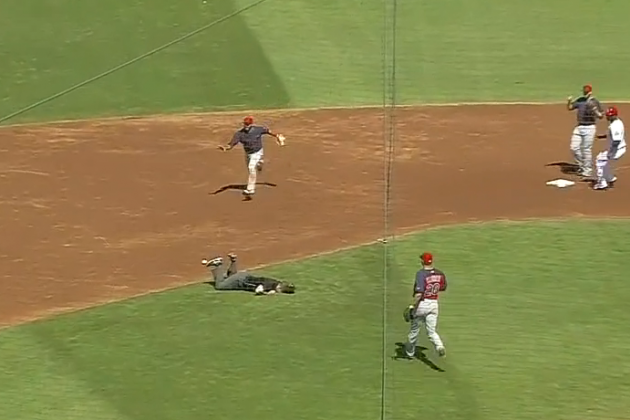
It might have been St. Patrick’s Day but MLB umpire Brad Myers was anything but lucky on Monday when he couldn’t avoid a line drive off the bat of The Reds Brandon Phillips during a spring training game. The painful-to-watch video, currently making the rounds, shows Myers was in a dangerous position with a right handed batter up so let me explain a few things that were left out of most national reports of the mishap.
With runners on first and second, and a four-man umpire crew, the second base umpire would normally be in a safer spot, deeper and closer to second base, on either side of the bag (his choice), but since the game was being used to test instant replay, there were only three umpires on the field and the fourth in the production truck. (Once the regular season games begin, replay review will take place in MLB’s NYC headquarters.) With only three umpires, in that situation, Myers, the third base ump, was responsible for most calls at second and third so he was positioned closer to third, in a precarious spot where the shortstop might play if the infield were drawn in – as the video shows, he barely had time to react and couldn’t avoid the laser off the bat of Phillips.
(See the video by clicking HERE.)
Now, what none of the reports also failed to mention is the ruling on this. While it was obvious that play stopped, the umpire is treated the same way as a runner would in this situation, so it is a case of interference, but not necessarily always (this is today’s lesson). This is not a dodge-ball type rule that says a runner is out if hit by a batted ball; the real infraction is interference because the person who was hit robbed the fielder of an opportunity to field the ball. What most serious baseball fans don’t realize is that if the fielder already had an opportunity to make a play, the play most likely should be allowed to continue after hitting the runner/umpire and the ball would still be considered “live.” Three examples of this are:
- The ball hits the first base umpire positioned behind the first baseman.
- A runner is hit behind the drawn in infielders.
- If Myers had been hit by a ball that deflected off the pitcher.
The rule states that a runner is out if hit by a batted ball before it passes an infielder and the umpire is convinced nobody else could make a play on it. This rule excludes the pitcher if he doesn’t touch the ball, but if he does, the ball remains live. Obviously, when it is a case of interference by the umpire, there has to be a neutral resolution. Since you can’t penalize the offense, the batter is awarded first base, but no other runners are allowed to advance, which is the best the rules can do for the defense. I saw this happen once in a high school game in a first and third situation where a hard grounder nailed the umpire on the foot, positioned to the right of the mound. Accordingly, the batter was awarded first base and the runner from third was sent back. This drew the ire and catcalls of both sets of fans/parents. The defensive team’s boosters were ticked off because the ball was headed to the second baseman – for a possible double play or error maybe – and the offensive team’s crew was mad because the runner was sent back – possibly avoiding being thrown out at the plate. The rules provide a little something for everyone, but both sides saw the situation as a case where something was taken from them. You could say this approach took a set of brass ones – only in America, but that’s another story for another day.
Let’s all hope Mr. Myers is the guy with the brass ones!
Jim Tosches is an amateur umpire and blogger in Encinitas, Ca and author of the book, “The Rules Abide: The Thinking Fan’s Guide to Baseball Rules (With History, Humor and a Few Big Words)”
 Baseball Rules! by JT